 Welcome to the 4th and final post of the “Building Talent Pipelines and Just-In-Time Recruiting” series. If you haven’t already done so, be sure to read parts 1, 2, and 3 before reading this post.
In Ben Franklin’s the Way to Wealth, he talks about the issues associated with carrying unnecessary inventory, “You call them goods; but, if you do not take care, they will prove evils to some of you…You expect they will be sold…but, if you have no occasion for them, they must be dear to you.”
If Ben were alive today and in the recruiting industry, he’d tell you that building, maintaining, and managing the turnover associated with in-process candidate inventory (traditional candidate pipelines) consumes a great amount of time and effort which ultimately may provide little-to-no value to candidate or client alike, at great cost to you.
So how can recruiters go about creating more value for their candidates and hiring managers with less work?
Just-In-Time Recruiting
Just-In-Time recruiting is based on the Lean, pull-based strategy of providing hiring managers/clients with candidates that exactly match their needs, when they want them, in the amount they want, without the safety net of a traditional candidate pipeline/WIP inventory.
Instead of proactively building and maintaining work-in-process (WIP) candidate pipelines without an actual hiring need, JIT recruiting has a primary focus of tapping into “raw material” candidate inventory (resumes, candidate profiles, etc.) and contacting, qualifying, and delivering candidates only in direct response to a hiring need.
JIT recruiting is replicable – anyone and any organization can achieve it.
How?
I’m glad you asked.
How to Achieve Just-In-Time Recruiting
Anyone can find and develop candidate pipelines, but not everyone can achieve JIT recruiting and delivery.
This is because there are a few system and recruiter capability requirements that must be met before Just-In-Time recruiting and delivery can be reliably accomplished.
JIT Recruiting Requires Access to Human Capital Data
In Part 2 of this series, I introduced the concept of resumes and/or candidate profiles (ATS, social networking sites, etc.) as potential candidate “raw material” in the sense that they can be converted by processing (contacting and screening) into a new and useful product: a live and viable candidate.
In order to achieve JIT recruiting, a recruiter must have ready access to a volume of human capital data in the form of resumes, candidate records, or social network profiles that they are able to retrieve on-demand.
Any recruiter or organization hoping to achieve JIT recruiting should have their own well-stocked candidate database in the form of an ATS/CRM solution into which every candidate that responds to a job posting, that is found through a search, referred into or otherwise identified by a recruiter is permanently captured.
In an ideal scenario, a recruiter would have access to a Talent Warehouse. A Talent Warehouse is a specialized use of a CRM solution that is both manually and automatically populated on a daily basis with potential candidates that have been identified, parsed, and permanently captured from the Internet, social networks, and major/niche job board resume databases.
In addition to having access to a well stocked private Talent Warehouse (or at the very least, an ATS/CRM app), having access to 1 or more major and niche job board resume databases would further enhance Just-In-Time recruiting capability.
It should go without saying, but I am also factoring in access to LinkedIn and the Internet itself as significant sources of human capital data (raw material candidate inventory).
The Power of Numbers
When it comes to raw material candidate inventory – the more the better!
For some individuals and small local companies, 5,000 to 10,000 resumes/profiles may suffice. For larger, national, and global corporations, hundreds of thousands to several million records would be more ideal.
Having fast and easy on-demand access to more human capital data increases the probability that you can easily find the right candidates at the right time, either directly (search and retrieval) or indirectly (referral/network recruiting).
It’s simple statistics.
X Degrees of Separation
Speaking of numbers and statistics – one thing to keep in mind is that if you have access to a source of 10,000, 100,000, or 1,000,000+ people, the value of having that access is not limited to solely those individuals. Every single one of those individuals knows other people, who also know people, and so on.
In that sense, every source of human capital data, whether it is an ATS, a job board resume database, etc., is not unlike LinkedIn, except you can’t “see” the people who they know. But they do know them.
So for people who say that using technology for talent identification (resume databases, applicant tracking systems, etc.) has its limitations because not every person can be found electronically/online somewhere – they don’t have to be.
Although I would argue that with each passing day, more and more people ARE able to be found electronically somewhere – a trend that will never decrease – the simple fact of the matter is that any source of human capital data can be used to access a MUCH larger network of people who may or may not be online anywhere today.
With strong referral recruiting/phone networking skills, a recruiter can use a database of 10,000 candidates to essentially reach 300,000 or more people, or an ATS with 1,000,000 people to reach over 30,000,000 people – whether they can be found anywhere online or not.
How’s that for power?
JIT Recruiting Benefits from High “Searchability”
The more “searchable” a source of human capital data, the easier it is to reliably achieve Just-In-Time recruiting and delivery.
The minimum level of searchability to facilitate JIT recruiting would entail support of full Boolean logic queries of at least 400 characters.
An ideal level of searchability would go beyond basic Boolean and include manual proximity search, variable term weighting, and root word/stemming coupled with an AI/matching/recommendation engine. ATS/CRM solutions should also feature automated resume/profile parsing and field-specific (most recent title/experience, etc.) and derived data (years of experience, etc.) searching.
Thankfully, LinkedIn is highly searchable, although annoyingly, it does not support stemming/root word search. Most major job board resume databases are also highly searchable, including field-specific search, fixed proximity (Monster’s NEAR), and matching/recommendation capability (Careerbuilder’s R2 and Monster’s Power Resume Search).
High searchability facilitates a sourcer/recruiter’s ability to quickly (as in <1 – 5 minutes in most cases) and easily find people who have the highest probability of either being a great match for a specific position, or are highly likely to know someone who is, and contact and engage them. In other words – convert resumes/candidate profiles in their raw material form to screened, qualified, and engaged candidates.
JIT Recruiting Requires Effective Engagement and Referral Tactics and Strategies
A critical link in the process of Just-In-Time recruiting is the conversion of candidates from their raw material form into in-process candidates. This involves successfully contacting and engaging potential candidates in 2-way communication. Having quick and easy access to a large talent pool is great, but if you’re not very good at establishing 2 way communication with candidates you haven’t already established a relationship with, you’re going to have a very hard time achieving Just-In-Time recruiting.
By very good, I mean >75% response rate to initial email and phone contact attempts to candidates, regardless of their job search status (active, casual, passive, not looking).
Remember that when tapping into large pools of human capital data, we’re not targeting people based on their job search status – the goal is to find, contact, and engage anyone who is potentially well-qualified. Practically anyone can get an active or even casual job seeker to call them back or return their email. However, very few people are able to reliably get >75% of people who are not looking at all to respond to an email or phone call.
The Bureau of Labor and Statistics estimates that 32% of all people are “passively looking” and that 34% are “not looking.” That’s fully 66% of the potential candidate pool – and the portion of talent that most recruiters and employers covet the most! If you can’t successfully connect with and quickly gain the interest of these people, you’re at a significant disadvantage in achieving Just-In-Time recruiting (or any form of passive candidate recruiting, for that matter).
I honestly believe this may be one of the core reasons why traditional proactive candidate pipelining is used as a solution to meet hiring needs. If you can’t get the majority of passive and non-job seekers who you’ve never contacted before to respond to you – your only option is to make the most of the people who you HAVE already contacted (your WIP inventory). However, being able to get practically anyone to respond to emails/call you back changes the game entirely, as you are no longer limited to the candidate inventory you happen to have on hand (your pipeline).
I know I’m onto something here – more on it later.
Just-In-Time Recruiting Requires Search Ability
Having access to a decent volume of high quality human capital “raw material” via systems that are highly searchable is quite literally worthless without the ability to actually leverage the data and the search capability. The value of information is directly related to the ability to retrieve precisely the right information, exactly when you need it.
To achieve Just-In-Time recruiting, sourcers and recruiters don’t have to be “Boolean Black Belts,” but they must be proficient in candidate search best practices, techniques, and strategies. In order to retrieve information from information systems, it’s critical to speak the “local language” – and there’s no getting around Boolean logic for querying data. Artificial Intelligence/Semantic Search applications and recommendation engines are great to have and can certainly help, but they are not a solution in and of themselves – they are not “the answer.”
Pipelining – Proactive vs. Reactive
Contrary to what some people may believe, Just-In-Time recruiting does leverage candidate pipelines – just not in the traditional way.
First, Just-In-Time recruiting involves the pipelining of raw material candidate inventory, in the form of resumes/candidate profiles. Recruiters and recruiting organizations should be both proactively and reactively, manually and automatically building a database of potential talent on a continual basis, 24 X 7.
Unlike traditional candidate pipelining, when these resumes are identified, acquired and permanently captured, the people that the resumes and social media profiles represent do not have to be contacted without an actual hiring need.
Second, Just-In-Time recruiting creates candidate pipelines as a result of sourcing and contacting potential candidates for a specific need. Any candidate that is not available, interested, or immediately qualified for the specific position being recruited for essentially becomes part of a work-in-process (WIP) candidate pipeline.
This can be referred to as “reactive pipelining,” and opposed to the “proactive pipelining” which involves contacting and engaging candidates without an actual hiring need.
Yes, I said the dreaded “reactive” word. I am well aware that many in the recruiting industry think “reactive” is a four-letter word. However, I am here to tell you that it most certainly is NOT. It’s an 8 letter word.
Seriously though, it is a common misconception that proactive = good, reactive = bad. In reality, Lean/TPS best practices dictate that an ideal state of production is one in which a product is produced or a service performed directly in response to a customer need (pull).
Ultimately, building candidate pipelines as a result of JIT recruiting efforts is actually a mix of both reactive and proactive strategy. It’s reactive in that people are contacted for a specific hiring need, and proactive in that anyone not interested, available, or the right fit for the position being recruited for enters the candidate pipeline for future opportunities.
There, that should make everyone happy. :-)
Just-In-Time Recruiting is Not Anti-Relationship
I received a few comments throughout this series from people who seemed concerned that Just-In-Time recruiting was anti-relationship – that it might somehow endorse “forgetting” about great candidates you’ve spoken or met with.
Nothing could be further from the truth. No aspect of the Just-In-Time recruiting concept and strategy has anything to do with not building and maintaining relationships with great people. I just wanted to take a moment to clear that up.
Just-In-Time Recruiting Requires Less Candidate “Processing”
While JIT recruiting supports building and maintaining relationships with candidates, it does not endorse doing so for no other purpose.
Remember that Just-In-Time is a Lean concept, and Lean is a production practice that considers the expenditure of resources for any goal other than the creation of value for the end customer to be wasteful. I asked readers in Part 3 what they felt was the ultimate value they provide to candidates. Jeremy Langhans responded with what I believe is the most accurate answer, which is “a job.”
Many recruiters who proactively build and maintain relationships with candidates for which they do not have a current need never provide any real value to the candidates. These recruiters proactively pipeline the candidates for their own personal benefit – to be able to have people they can quickly “activate,” requalify, and submit when a position finally does open up. However, what real value is being provided to candidates who never move past the “relationship maintenance” phase in the recruiting lifecycle?
You only need to look at a few of the insightful comments left on previous posts in this series by people who have recently been on the candidate side of the experience to know that being kept warm doesn’t really do much for them.
In a JIT recruiting scenario, candidates are not contacted prior to actual need – their time is not potentially wasted in a perpetual state of being “kept warm.” If a candidate is contacted for a specific opportunity and it is determined that it is not a proper fit, or that they are not interested or available, they do enter the candidate pipeline for future opportunities and become work-in-process candidate inventory.
However, in Just-In-Time recruiting, the level of “processing” (relationship maintenance) involved in being a pipelined candidate is typically lower than that of candidates who are proactively pipelined ahead of need. In Lean terminology, this means that JIT recruiting reduces waste (overprocessing) and increases value for the candidates involved.
Here’s a quick story to illustrate this point: I was recruiting for a project manager with telecommunications industry and EAI experience and I found someone with a very strong resume – which was posted 6 months prior to the time I found it. I called him, left him a good message, and he called me back. He explained that he was not looking or available because he was working on a contract that was scheduled to end in 6 months. In about 10 minutes, I found out more about him and informed him of the kinds of positions I recruited for and typically had available. Then I asked if I could reach out to him in about 5 months. He said sure, so I set a reminder to call him in 5 months. I literally forgot about him until my reminder popped up 5 months later. I contacted him, qualified him some more, and submitted him to one of my clients. 2 phone calls, 1 submittal, 1 interview, 1 hire.
My point here is that I did not keep this person “warm” by chatting with him every 2-4 weeks during the 5 month period, and in no way to it prevent me from having a client hire a fantastic candidate who was extremely pleased with the opportunity. Minimal processing, maximum value for all involved – Lean/JIT recruiting at its purest form. I could have called this candidate every 30 days, but it would not have added any additional value to him or to my client.
Final Thoughts
In an effort to continually improve processes is critical to identify the assumptions and beliefs behind the current work process (i.e. “the way it’s always been done”) and to challenging them – significant breakthroughs can be achieved when you are able to identify untapped opportunities through challenging and assumptions and traditional beliefs.
Do you really think the way that the majority of people and organizations currently execute sourcing and recruiting is absolutely perfect, offering no room for improvement?
I’m trying to move the ball forward. I am not content to with the way things have always been done. I do not blindly accept what others tell me, and neither should you. There’s always a better way – what are you doing to find it?
I think that most people are trained on or learn about the concept of traditional candidate pipelining early in their careers, and I may be one of the few who was not. This seems to have given me somewhat of a unique perspective on the subject. In other words, no one ever told me the world was flat – that the most effective way to recruit has to involve traditional candidate pipelining.
It’s important to understand that I did not just sit around and think these ideas up, trying to adapt Lean and Just-In-Time production to recruiting. On the contrary, practically everything I write about comes directly from experiences I had during my first years in the recruiting industry, in the trenches, working a recruiting desk in a highly competitive staffing agency, 10 years before I even heard of the concept of Just-In-Time, let alone the Lean concepts of Value, Waste, Pull, and Perfect First-Time Quality.
What I learned largely through my own trial and error in the process of trying to not only keep my new job but also become the top performer for the company ended up being uncannily aligned with core Lean philosophy – creating more value for my candidates and clients with less work, and giving them exactly what they want, when they want it.
The expression “learning to see” comes from an ever developing ability to see waste where it was not perceived before. I’d like you to try and work in a Lean approach to everything that you do – to view the expenditure of time and effort for any goal other than the creation of value for your candidates and clients/hiring managers as wasteful.
I am not asking you to become a Lean/JIT recruiting convert – I’m just asking you to think, and to examine your recruiting processes and practices with a critical eye for waste, such as unnecessary WIP candidate inventory, over-processing, excessive waiting, overproduction, and defects.
Give it a try, and let me know how it goes. Thanks for reading!
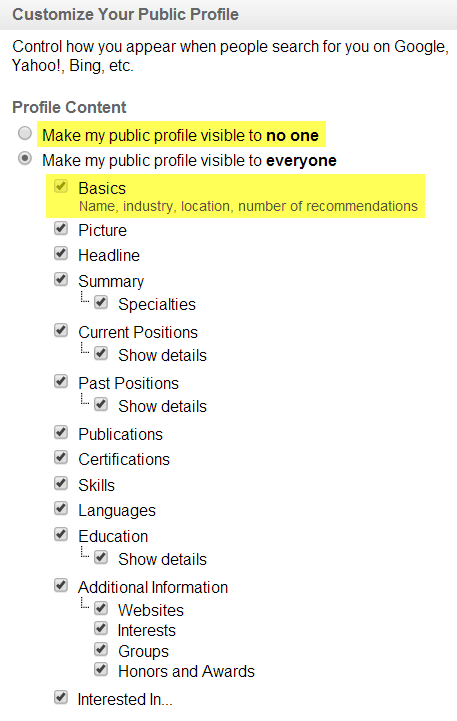
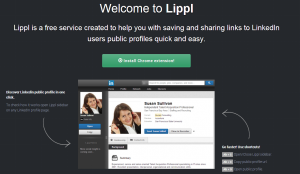 I am pleased to share a cool and very practical free Chrome extension that allows you to quickly and easily view the public profiles of LinkedIn members beyond your 2nd degree network, thus showing you their full name.





















 In
In  In
In  Back in 2009 I wrote a 4-part series examining the logic and practices behind proactively building talent pipelines and how I believe that traditional talent pipelining can be significantly improved through leveraging
  If you haven’t already, you should definitely check out