Monthly Archives: July 2011

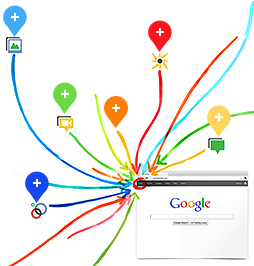
How to Search Google Plus to Find People by Location

Would you like to find people on Google+?

How about find people on Google+ that live in a specific area?

If you answered “Yes!” to the above questions, you’ve come to the right place.

I will walk you through the problems with Find People on Plus and Google’s own Google+ search before I show you something I’ve been tinkering with that seems to work well to reliably find people who live in a specific area.

UPDATE: I have a NEW Google Plus search guide updated for 2013.

Find People on Plus

If you’re interested in finding people on Google+, you’ve probably poked around Find People on Plus.

Find People on Plus has a few issues you should be aware of, not the least of which is the fact that it has only indexed a fraction of the total number of Google+ profiles.

Another issue is that you can’t reliably find people based on location, which is kind of important for most people.

For example, let’s take a look at a basic skill/interest and location search: Continue reading

How I Search LinkedIn to Find and Identify Talent

Would you like to know how I search LinkedIn when sourcing for talent?

I don’t have a premium LinkedIn account, so you may be surprised to learn that I don’t X-Ray search LinkedIn all that often.

I’ll tell you why in a moment, but first I would like to share my inspiration for this post.

I recently read a great post that addressed an issue with X-Ray searching LinkedIn and that pointed out that pattern recognition is critical to effective online sourcing.

I could not agree more – truly dynamic pattern recognition is something I think is unique to humans and is something that I believe cannot be replicated by applications claiming to leverage artificial intelligence, semantic search, and Natural Language Processing (NLP). I could elaborate further on this topic, but that would unfortunately bore 98% of my readers, so I will save it for another post that they can choose not to read later. :-)

Suffice it to say I wholeheartedly agree that is it more important to have the right investigative thought process than to have any specific Boolean search string or pre-built X-Ray search.

Getting back to how I specifically search LinkedIn to find people – you first need to understand some of the significant issues associated with using Internet search engines in an attempt to find public LinkedIn profiles. In other words, you should know they “why” before the “how.”

As an added bonus, you’ll also find that I’ve discovered that Bing and LinkedIn apparently don’t play well together anymore, and I’ll issue a LinkedIn Sourcing Challenge to the international sourcing and recruiting community to crowdsource the solution. Continue reading

The Passive Candidate Pipeline Problem


If you’re in HR or recruiting, you’ve undoubtedly been exposed to (and likely believe in) the concept that proactively building passive talent pipelines is critical to talent acquisition success. Some would say that pipelining passive candidates is one of theĀ sacred cows of recruiting – you just don’t question it.

It’s my opinion that the belief in talent pipelines is driven heavily by the fact that it can be incredibly difficult to quickly find suitably qualified candidates once you actually have a hiring need if you don’t already have the right people identified and queued up.

As such, it seems only logical to begin to identify potential candidates prior to your actual need so that when you do need to hire, you have a number of people you can contact, engage, interview and make a final hiring decision from.

Sounds great in theory, doesn’t it?

I thoroughly enjoy sacred cow tipping, and I’m hard-wired to automatically question anything that seems to be generally accepted as truth. So if you’ll indulge me, in this post I am going to expose you to a critical flaw in the actual practice of passive candidate pipelining that no one seems to like to talk about. Continue reading

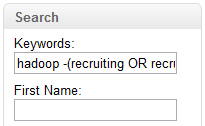
LinkedIn’s Undocumented Search Operator

Earlier this year, I wrote an article on how to use LinkedIn’s advanced search operators as search agents in which I briefly mentioned and demonstrated an undocumented LinkedIn search operator at the very end of the post.

Did you catch it?

If not, you’re in luck.

Although it’s not an Earth-shattering discovery by any means, it is a discovery nonetheless, and because I keep encountering people who don’t know about this LinkedIn search operator, I thought it would be a good idea to dedicate a short post to the topic to ensure ensure everyone is aware of it. Continue reading