Monthly Archives: March 2011

How to Find The Total Number of LinkedIn Members

On March 22nd, LinkedIn announced that they had officially crossed the 100 Million member mark.

However, they might have actually crossed the 100 Million member milestone back in January.

How would I know?

I started seriously exploring LinkedIn Ads ever since they announced that they emerged from beta on 1/26/2011, and I noticed that once you configure an ad, LinkedIn displays the total estimated audience based on your targeting, including geography, company, job title, group, gender and age.

When I first looked into LinkedIn Ads, I noticed that the total target audience was somewhere over 99,000,000 when I did not make any targeting selections. I figured this was representative of the total estimated number of LinkedIn profiles worldwide.

Because the figure was so close to 100,000,000, I made a mental note to come back and check in to see if and when the estimated audience crossed the 100M mark.

Back on January 30th, I took a screenshot of a targeted audience of 101,382,559. Continue reading

Sourcers and Recruiters – Don’t Fear Watson or Semantic Search

I’ve read a few articles recently talking about IBM’s Watson and how the technology they developed may be the harbinger of unemployment for people in many professions.

Here’s one from Fortune magazine, asking if IBM’s Watson will put your job in jeopardy.

Here’s another suggesting that those who train others in Internet, social media, ATS, and resume database sourcing techniques and strategies will be eventually eliminated by semantic search solutions.

Watson Winning at Jeopardy isn’t Surprising

First, let’s first recognize that it’s an apples to oranges comparison between Jeopardy and sourcing/recruiting. Continue reading

LinkedIn’s Dark Matter – Undiscovered Profiles

Sourcing has a fundamental problem: All searches return results.

Yes, that is actually a problem.

Why? Because everyone’s a winner.

Type in a few keywords and BAM! – you get some good looking results. Hey, this sourcing stuff isn’t so hard!

If I’ve said it once, I’ve said it a thousand times – sourcing is easy. In fact, it’s ridiculously easy to find some people.

So if you and your company are happy with finding some people and not necessarily the best people available to be found, then you can stop reading now and go back to finding some people.

For everyone who’s still reading this, try answering these questions:

  1. Can you ever be sure you’re finding everyone there is to be found?
  2. How do you know you’ve found the best people available?
  3. How do you know you’ve found all of the best people?
  4. Are there people on LinkedIn, in your ATS, in job board resume databases that are never found?
  5. How can you be aware of social media profiles and resumes that your searches can’t return in results – but are there?

Sourcing is easy, but it’s not easy to get to the point where you are sure you have found all of the best available results, nor is it easy to specifically target and find people others cannot and do not.

Most people use relatively basic, straight forward/direct keyword and title searches. There’s nothing wrong with that – they clearly “work” – anyone running those kinds of searches will find results.

However, they will also find exactly what everyone else finds when searching for the same types of people, which yields zero competitive advantage.

The fact that all searches produce results is a problem because it lulls people into thinking that sourcing is easy, and at least on the subconscious level – it leads people to believe that the results that are returned from searches represent all available matching and relevant results.

However, it is a fact that no single search can find all of the people you’re looking for, and there are many social media profiles and resumes that are never found.

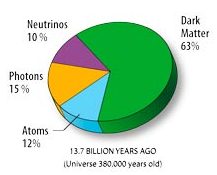
Let me introduce you to the concept of Dark Matter. Continue reading

LinkedIn Sourcing Challenge – X-Ray Location False Positives

I was extremely pleased to receive many responses/solutions to the Ruby LinkedIn Sourcing Challenge I posted recently, including some from well-known online sourcing heavyweights, as well as a number from other talented folks who came out of the Internet ether from several continents to show off their skills and take a crack at solving the challenge.

Kudos to those who successfully found people on LinkedIn who have experience with Ruby but do not make explicit mention of it on their profile!

I sincerely hope everyone appreciated seeing the various approaches and methods people utilized to solve the first LinkedIn Sourcing Challenge – that was my primary motivator in posting it.

One thing I noticed from some of the responses is that for a few people, the challenge seemed too easy.

So – if you’re up for another LinkedIn Sourcing Challenge, take a crack at this one – it’s at least a degree more difficult than the last. :-) Continue reading

LinkedIn Makes Obvious Moves to Affect X-Ray Searching

If you happen to do quite a bit of LinkedIn X-Ray searching, you might be noticing that some people are taking control of how they appear in public search results.

Or maybe you aren’t noticing it, because you can’t.

Confused?

Read on to learn more.

LinkedIn Profile Changes

I’m not exactly sure when this change was introduced (anyone?), but I recently noticed that LinkedIn is taking very obvious efforts to bring the editing/control of the public profile to the attention of users.

They’re obvious to me at least. :-)

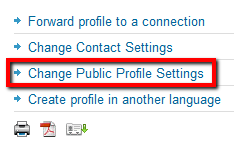
When you look over to the right side of your profile, you will notice “Change Public Profile Settings:”

When you click that, you get this huge blue call-out:

Continue reading

LinkedIn Sourcing Challenge – Ruby

During my SourceCon NYC session, I gave an example of a sourcing challenge that can verify one’s “capacity to think logically and solve problems in novel situations, independent of acquired knowledge. It is the ability to analyze novel problems, identify patterns and relationships that underpin these problems and the extrapolation of these using logic.”

This capacity is otherwise know as fluid intelligence or fluid reasoning .

The LinkedIn Sourcing Challenge

If you and/or your team are up for a test of your fluid reasoning and sourcing capability, try solving this challenge:

  • Find a LinkedIn profile of someone who has Ruby on Rails experience, but does not mention Ruby, Ruby on Rails, Rails, or RoR in their profile, and show with a link or other evidence exactly how you are certain they have Ruby experience.

There is no single correct answer – there are many different approaches to solving this challenge.

I’m going to recognize Jeremy Langhans once again for being able to solve that challenge in about 15 minutes before I even finished my presentation, using only his iPhone. To this date, no one else has even tried to take a crack at it.

The gauntlet has been thrown down. I hope at least a few people are up to the challenge! Continue reading

#TRU London 3 Recruiting Unconference Review

I was invited to attend TRU London 2 in 2010, but I unfortunately had a scheduling conflict and was unable to make it.

So when Bill Boorman, conference disorganizer extraordinaire, asked if I could make it out for TRU London 3, I blocked out my calendar as I was determined not to miss this event.

Unconference?

I had been warned by attendees of previous TRU London events that I would be entering a chaotic atmosphere with a lack of organization.

In fact, I was advised it would likely be best if I didn’t have any expectations at all.

However, I must say that I felt that TRU London was quite organized.

I hope Bill isn’t offended by that observation, because I know he takes pride in his unconference experience which is specifically designed to deviate from the standard conference format where a bunch of people listen to one presenter for an hour at a time.

It’s obvious that a different format from the recruiting conference norm does not necessarily lead to a poor experience. Although there were some track, track leader and schedule changes, I did not find them to be an issue, disruptive, or to lessen the impact of the event at all. Continue reading

Update Your Bing X-Ray Searches of LinkedIn to Target Profiles


Beginning early last week, I’ve had a few people reach out to me and ask about some changes LinkedIn is apparently making to the public profile listings.

In the past, I’ve written about how Bing is easier and more effective at searching LinkedIn profiles than Google.

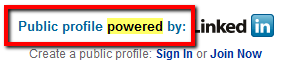
One of my suggestions for targeting profiles an avoiding directory and job results was to search for the word “powered,” because public profiles on LinkedIn have the phrase “Public profile powered by,” and the word “powered” seemed to be unique only to profiles.

LinkedIn is Tinkering

While you can still search LinkedIn via Bing using +powered and find results, the only reason it seems to work is due to the fact that Bing has taken “snapshots” of the old LinkedIn profiles the last time Bing’s crawlers have visited them. The original (non-cached) search results don’t mention “powered.”

I’ve found that many (all?) public LinkedIn profiles no longer mention the phrase “Public profile powered by,” so adding +powered to your LinkedIn X-Ray searches via Bing will prevent some public LinkedIn profiles from being returned in your searches – and you won’t even know it.

But now you do. Continue reading