
Monthly Archives: January 2010

What Social Recruiting is NOT

Social_Recruiting_NotAfter recently writing about moving beyond the hype of social media and recruiting, I took some time to reflect quite a bit on the topic, and focused a critical eye on exactly what “Social Recruiting” is.

While there is no shortage of what people think “Social Recruiting” is, quite frankly – I’m not satisfied with any of the definitions and explanations I’ve found – most are too surface level and one-dimensional, as well as inaccurate, in my opinion. It seems that a large portion of what many people seem to be happy to accept as “Social Recruiting” is really nothing more than traditional job posting and employer marketing and branding in a 2.0 environment.

However, I can definitely appreciate the challenge of trying to nail down an accurate and concise definition of “Social Recruiting” – it’s quite the slippery fish. So rather than trying to answer the question of “What is Social Recruiting?,” I’m going to tell you what I think Social Recruiting is NOT. Continue reading

Social Media and Recruiting – Beyond the Hype

Social Media Bandwagon by Matt Hamm via Creative CommonsI’m very much an anti-hype, anti-bandwagon person.

I neither like to nor want to get caught in the undertow of the emotional rush associated with being excited about something that nearly everyone else seems to be excited about, where everyone celebrates the new and “cool factor” with little-to-no critical thought.

When that next bright and shiny object comes along, it’s all too easy to be blinded by it.

Rest assured I have not been blinded by #socialrecruiting. I’ve been using social media for a little while now (Twitter, LinkedInFacebook and blogging), purposefully remaining calm and collected on the subject – choosing to explore the true potential rather than get caught up in the hype. 

So whether you’re a social recruiting evangelist, hater or n00b (I’ve been all 3, not necessarily in that order), you’ll find some value in this post because I am going to strip away all of the hype surrounding social recruiting, demystify it, and cut straight to the heart of the real opportunities associated with using social media for sourcing and recruiting. Continue reading

The Future of Recruiting: The More Things Change…

The Future of Recruiting - image by Silverisdead via creative commonsNow that we are on our way into exploring the new year, I’ve seen some articles on what’s coming next for the recruiting industry this year, and even as far out as 10 years from now.
When I read one such article written by Kevin Wheeler, I was struck by his comment that although sourcing remains a topic he is interested in, he feels that “the need to conduct in-depth Internet searches and apply Boolean logic to searches is no longer relevant in the majority of cases.”

I was prepared to write an article just in response to that thought, but as I sat down to review his post again on Sunday in preparation for my post, I noticed that Kelly Dingee had commented in defense of electronic talent identification.

In response, Kevin wrote “I think that intensive Internet searching, for most internal recruiters, is a sign of their failure to develop a community of potential candidates. If the position is a unique or one-of-a-kind search, they should probably use a third party recruiter. For volume and routine hiring there should be no need to use anything beyond a network of potential candidates whether proprietary or not. Building that community is what a recruiter’s job is all about – not running searches or becoming a computer nerd.”

Wow. Where do I begin? Continue reading

LinkedIn Sourcing Tip: Searching by Company? Beware!

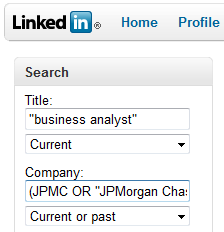
LinkedIn_Company_Search_Image_3aRecently, I wrote about the intrinsic issues associated with searching LinkedIn for potential candidates with specific industry experience, and how using the “Industry” field can actually prevent you from finding the people you’re looking for. 

A number of readers responded by suggesting a logical solution to the issue – searching by specific company name(s) instead of using LinkedIn’s “Industry” field.

It is a logical solution, but a potentially flawed one nonetheless.

I’m going to show you some reasons why, and if you read this post within the next 5 minutes, I’ll even throw in a LinkedIn  company search anomaly as an added bonus. Continue reading